Take3 weeks ago
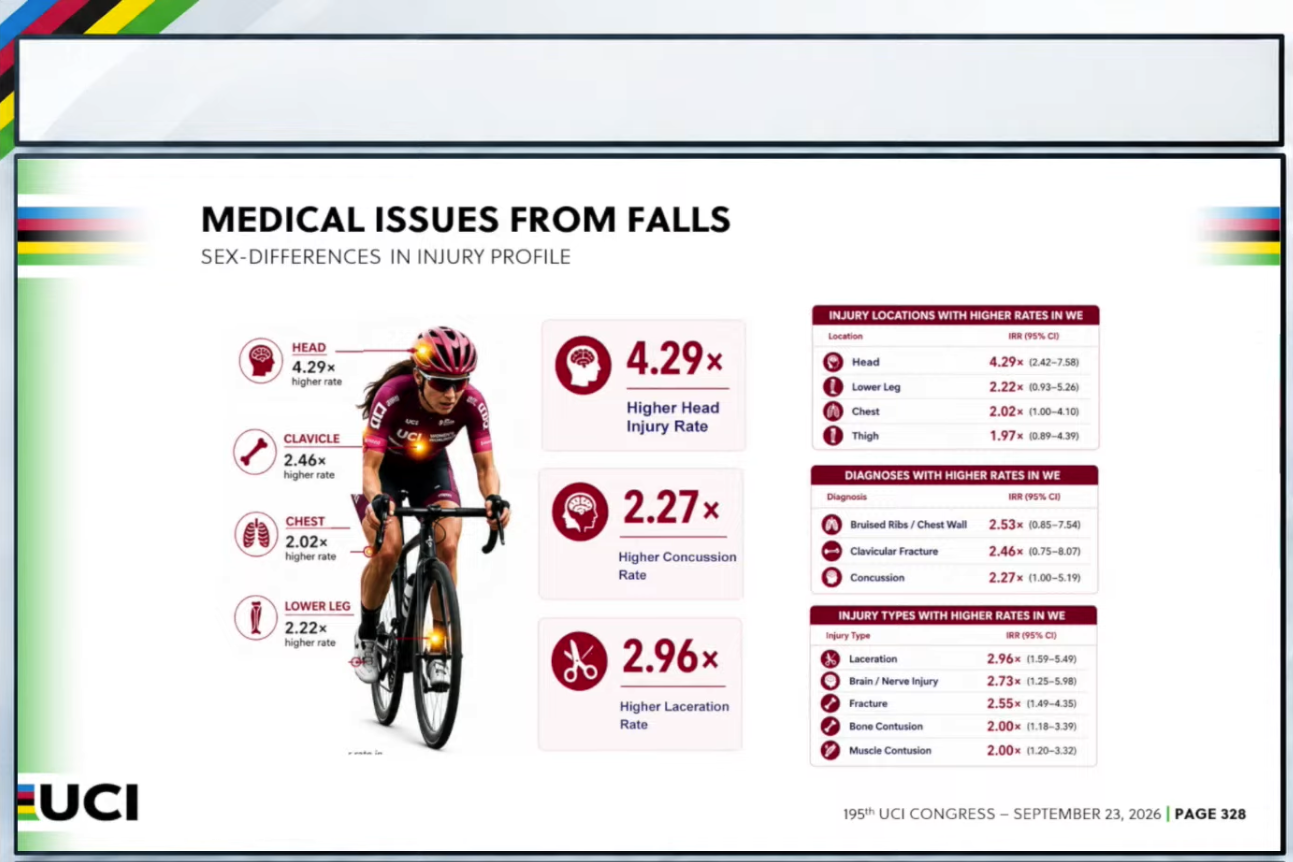
Women's WorldTour riders carry a higher injury risk ratio than men during racing — 11.10 versus 10.24 — and it isn't about speed. Female riders are disproportionately prone to wrist fractures and need EMS transport more often, while male riders more frequently get treated on-site and continue. That gap points to equipment and race infrastructure built around one body type, not two.
The UCI's own surveillance data shows injury rates climbing WorldTour-wide even as average race speeds stay flat, which already rules out speed as the driver. Layer in the sex split — higher risk ratio, more wrist fractures, more EMS transports for women — and the pattern looks structural rather than random. The UCI just stood up a standardised injury-surveillance platform covering both men's and women's WorldTour, published this February, which is the first real chance to test that theory with matched data instead of guesswork.
Sources
Castelli's new prototype crash protection system weighs the same as two energy gels, and could soon be used on the WorldTourPro-cycling crashes can be bad, but evidence suggests slower bikes aren't the answerDevelopment of a secure, standardised and interoperable surveillance platform for race-related injury and illness data within the UCI men's and women's road cycling world tour: a study protocol
Analysed 3 sources, written and summarised with AI · How we work